
For nearly three hours Tuesday, Mayor Andre Dickens, Chief of Staff Courtney English, and city leaders laid out their case for why Atlanta’s next chapter of growth must reach neighborhoods that have too often been left behind.
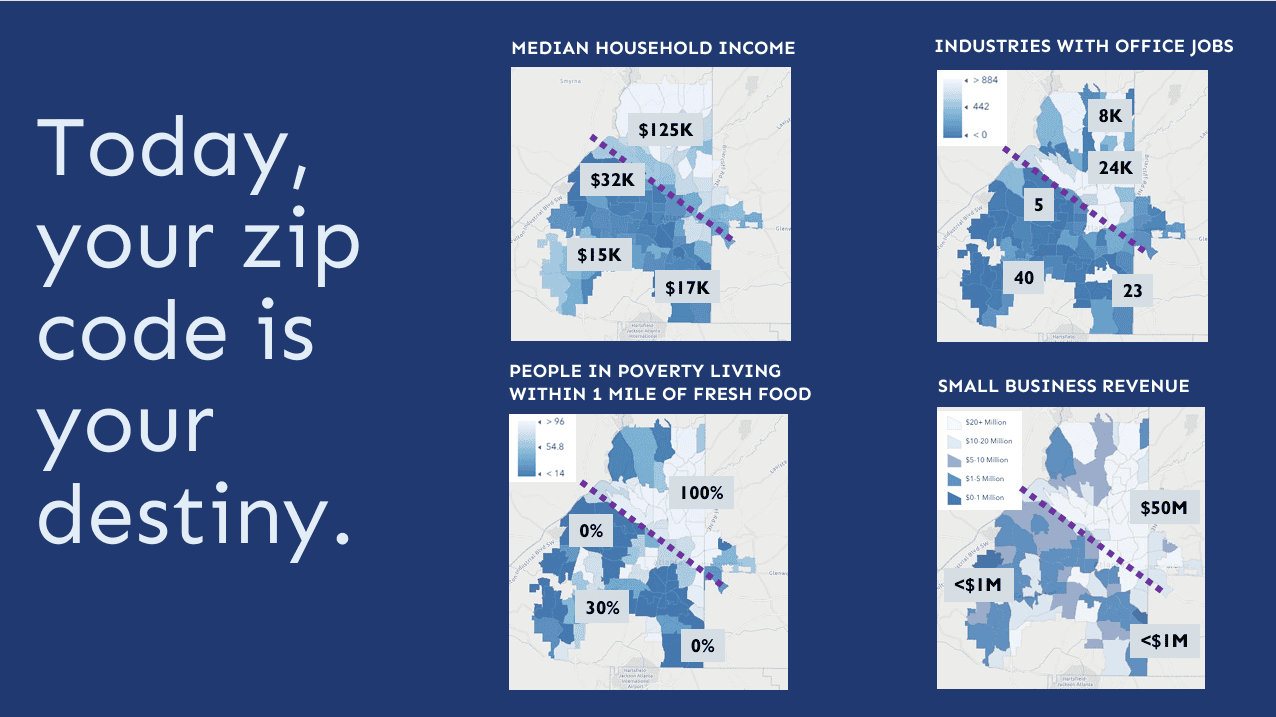 During a presentation before the City Council Community Development/Human Services Committee, administration officials outlined the proposed Neighborhood Reinvestment Initiative (NRI), a comprehensive strategy designed to expand investment in historically underinvested communities while strengthening anti-displacement protections, increasing accountability, and giving residents a greater voice in how neighborhood investments are made.
The discussion comes as Atlanta continues to experience record investment, population growth, and national recognition. But city leaders argued that many residents still face challenges accessing affordable housing, healthy food, economic opportunity, and other resources that contribute to long-term quality of life.





“We have one city, but too often two realities,” city leaders said throughout the presentation.
Why City Leaders Say This Matters
Throughout the hearing, administration officials pointed to stark differences that still exist between Atlanta neighborhoods.
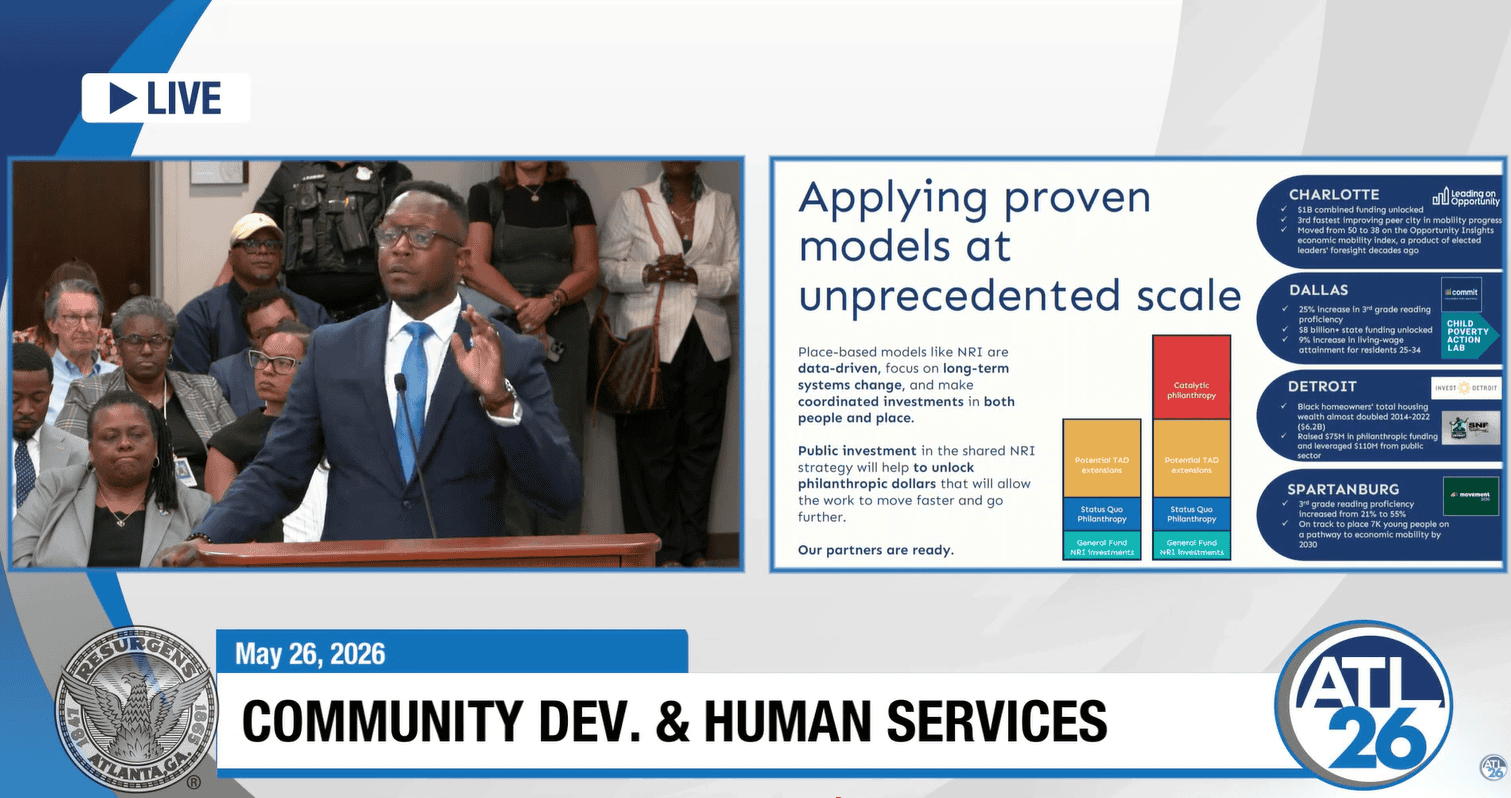 Chief of Staff Courtney English highlighted a nearly 20-year life expectancy gap between some communities, along with disparities in housing stability, food access, economic mobility, and health outcomes.
“The system isn’t broken,” English told councilmembers. “These kinds of realities do not happen by accident.”
Administration officials said the proposal is the result of years of community conversations, recommendations from the Neighborhood Reinvestment Commission, and ongoing feedback from residents and City Council members.
The goal, they said, is not simply to invest more dollars, but to create better outcomes for families and neighborhoods.
What’s Included in the Proposal
The Neighborhood Reinvestment Initiative includes four major components:
- Extending six existing Tax Allocation Districts (TADs).
- Creating a new NRI Trust Fund to support neighborhoods outside current TAD boundaries.
- Launching an Anti-Displacement Playbook focused on housing stability, renters, homeowners, small businesses, and neighborhood preservation.
- Reforming TAD advisory committees to increase resident participation and oversight.
The proposal would also establish additional accountability measures, including public reporting, updated redevelopment plans, independent reviews, and City Council approval of projects funded through the proposed NRI Trust Fund.
A Different Way to Measure Success
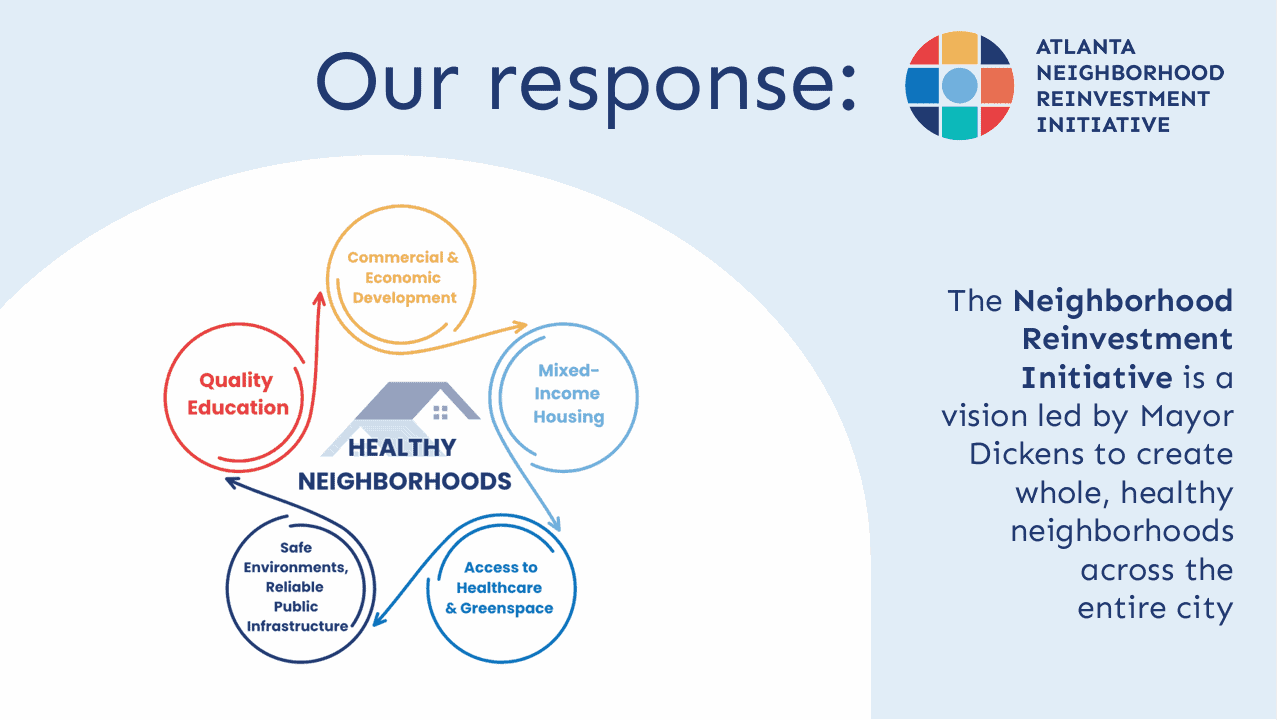 One theme repeated throughout the presentation was that success should be measured by neighborhood outcomes, not just projects completed.
Administration officials said future investments should ultimately be judged by whether they help families stay in their homes, reduce displacement, increase access to healthy food, strengthen commercial corridors, create economic opportunity, and improve quality of life for residents.
Continuing the Conversation
While committee members expressed support for many of the goals of the proposal, several councilmembers requested additional time to review an independent audit of Invest Atlanta’s TAD programs that is expected to be released June 4.
Mayor Dickens agreed.
Rather than pushing for an immediate vote, the Mayor said the administration would spend the next two weeks continuing to work with councilmembers, answer questions, and gather additional feedback before the legislation returns for consideration.
“We have been responsive to this council’s feedback, to the community’s feedback, and to our partners,” Dickens said. “We’ve hosted dozens of sessions and meetings, and we have improved the plans through iterative improvements by talking with you all and talking to the community.”
The Mayor said he welcomes the opportunity to continue refining the proposal while maintaining focus on the challenges residents face today.
“Children cannot be asked to wait for perfect conditions or perfect policy,” Dickens said. “They are growing up right now.”
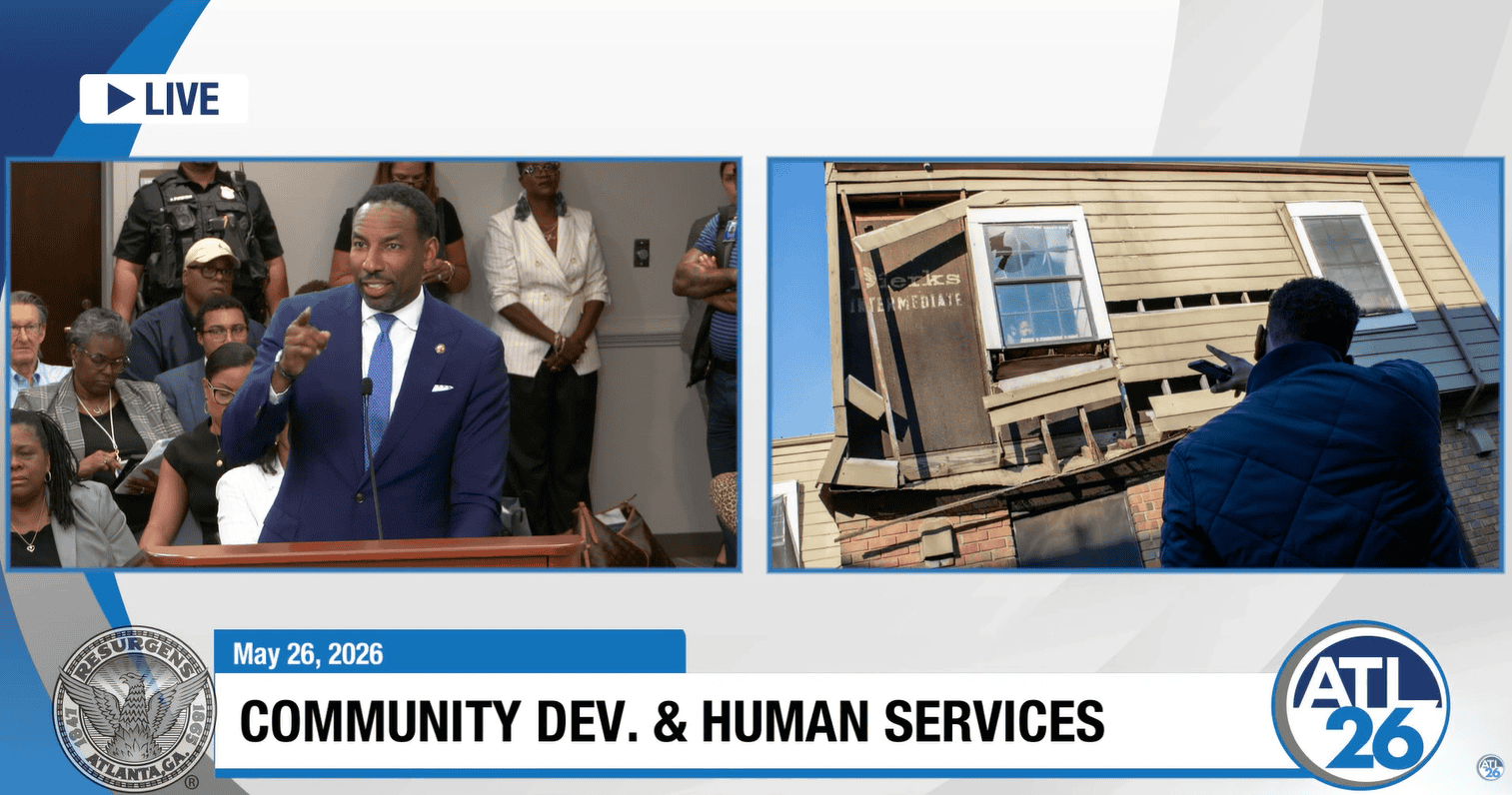 As the meeting concluded, Dickens reminded councilmembers why the administration believes the work cannot wait indefinitely.
“The residents of the south and west side of Atlanta have been patient. I am one,” he said. “They have shown up. They have made their voices clear. Now it is our time to show up for them.”
Over the next two weeks, city leaders say they will continue meeting with councilmembers and stakeholders as the conversation around the Neighborhood Reinvestment Initiative moves forward.
For the administration, Tuesday’s discussion was not simply about legislation. It was about a larger question: how Atlanta ensures that the benefits of the city’s growth reach every neighborhood and every family.