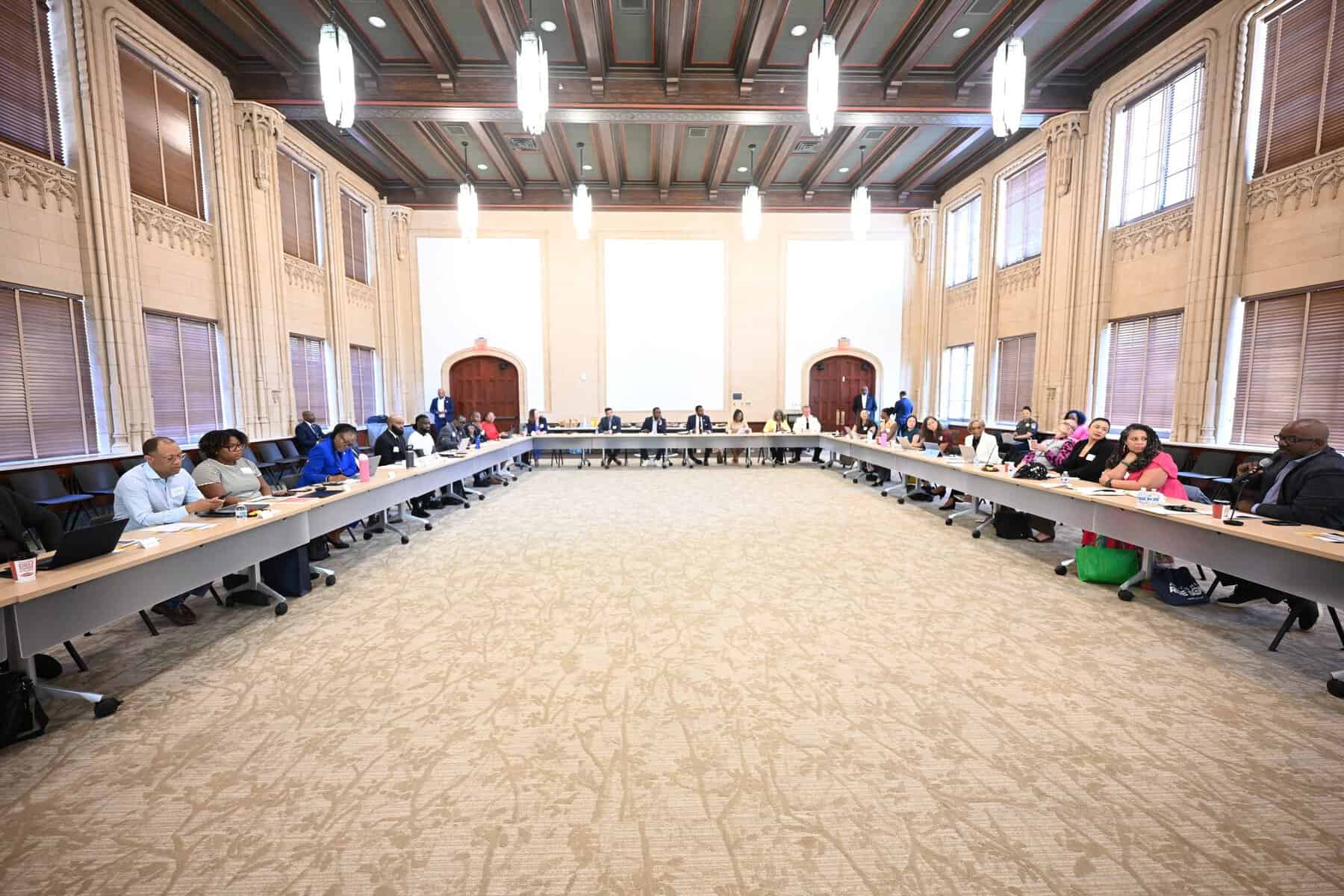
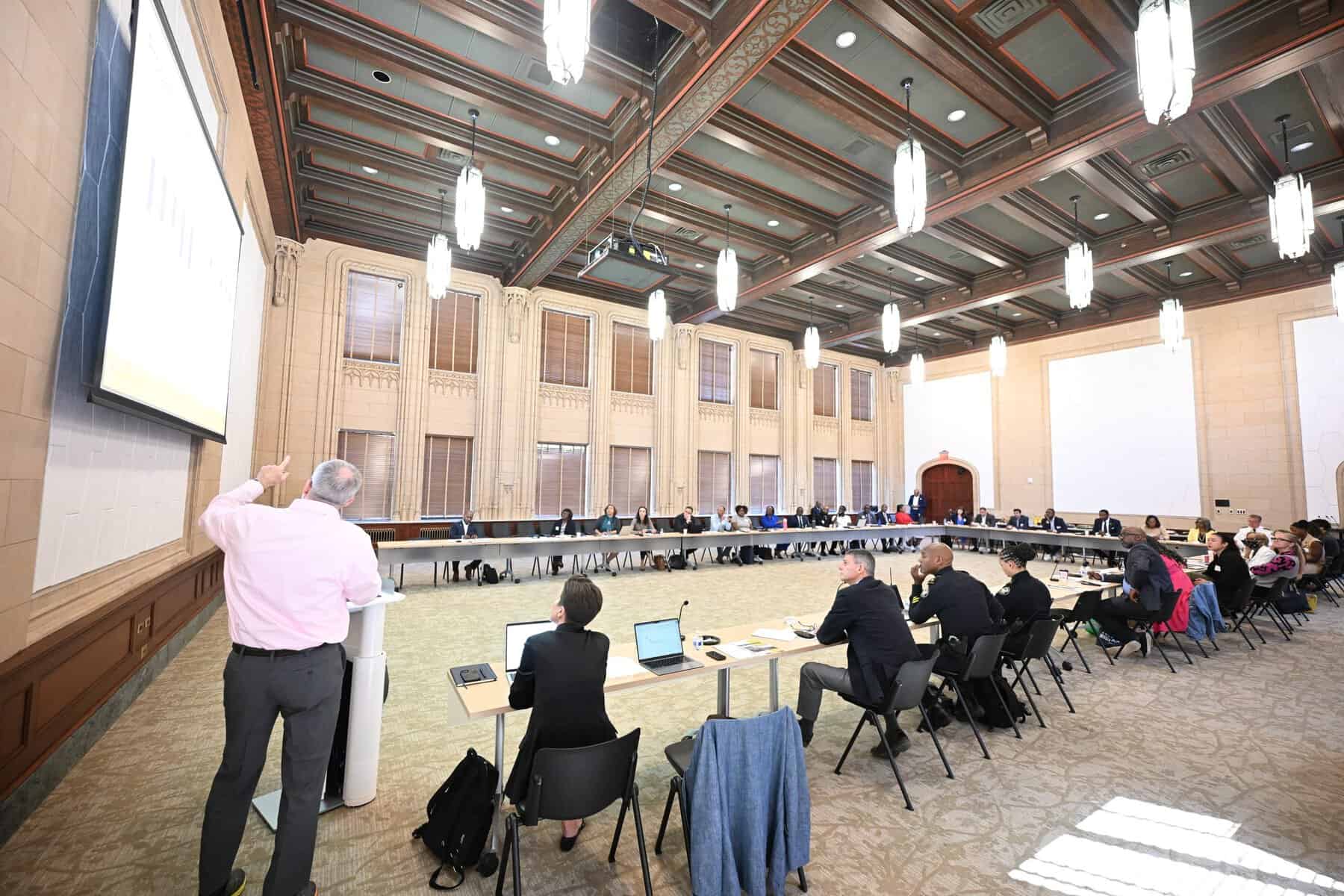
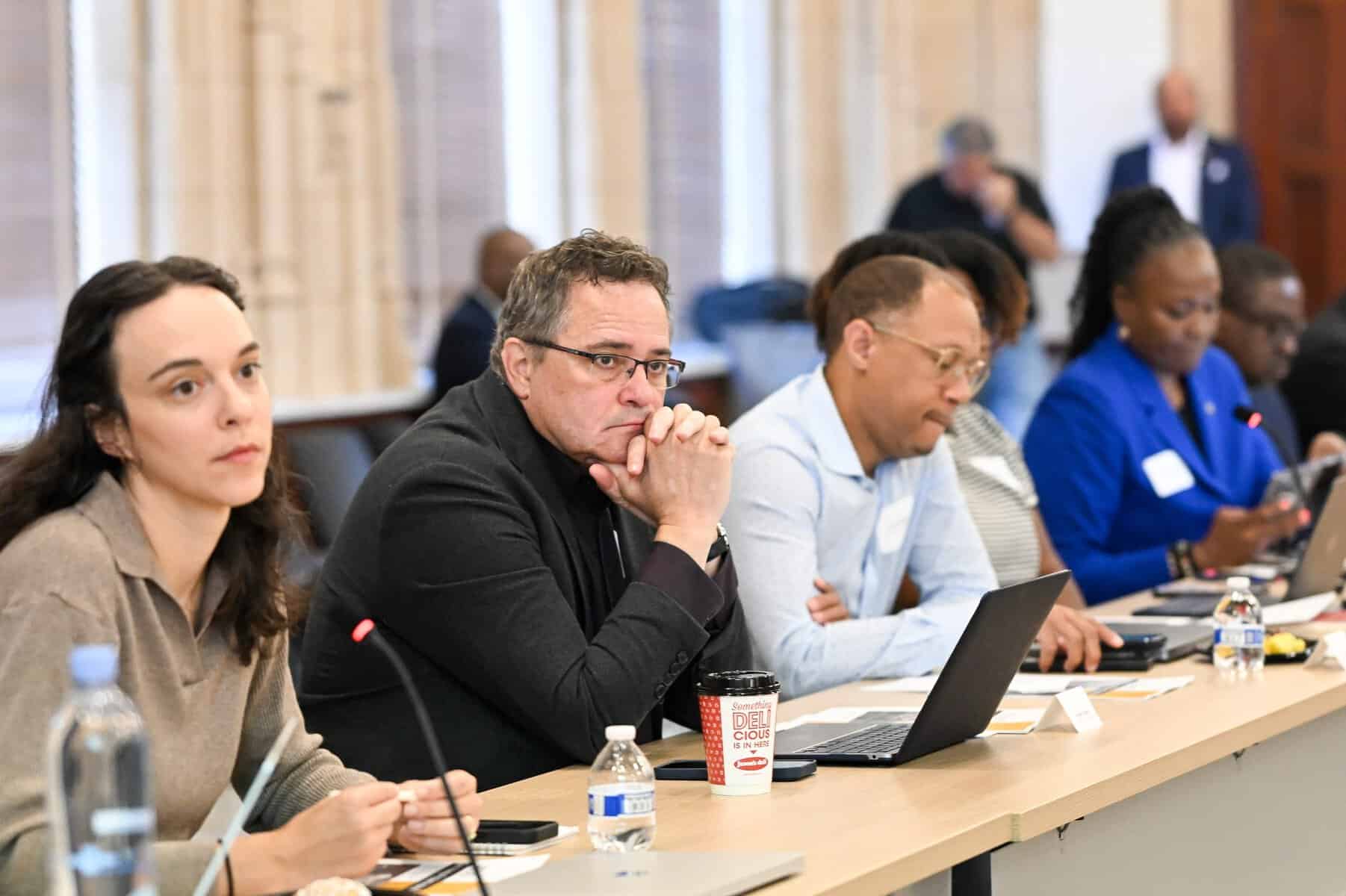
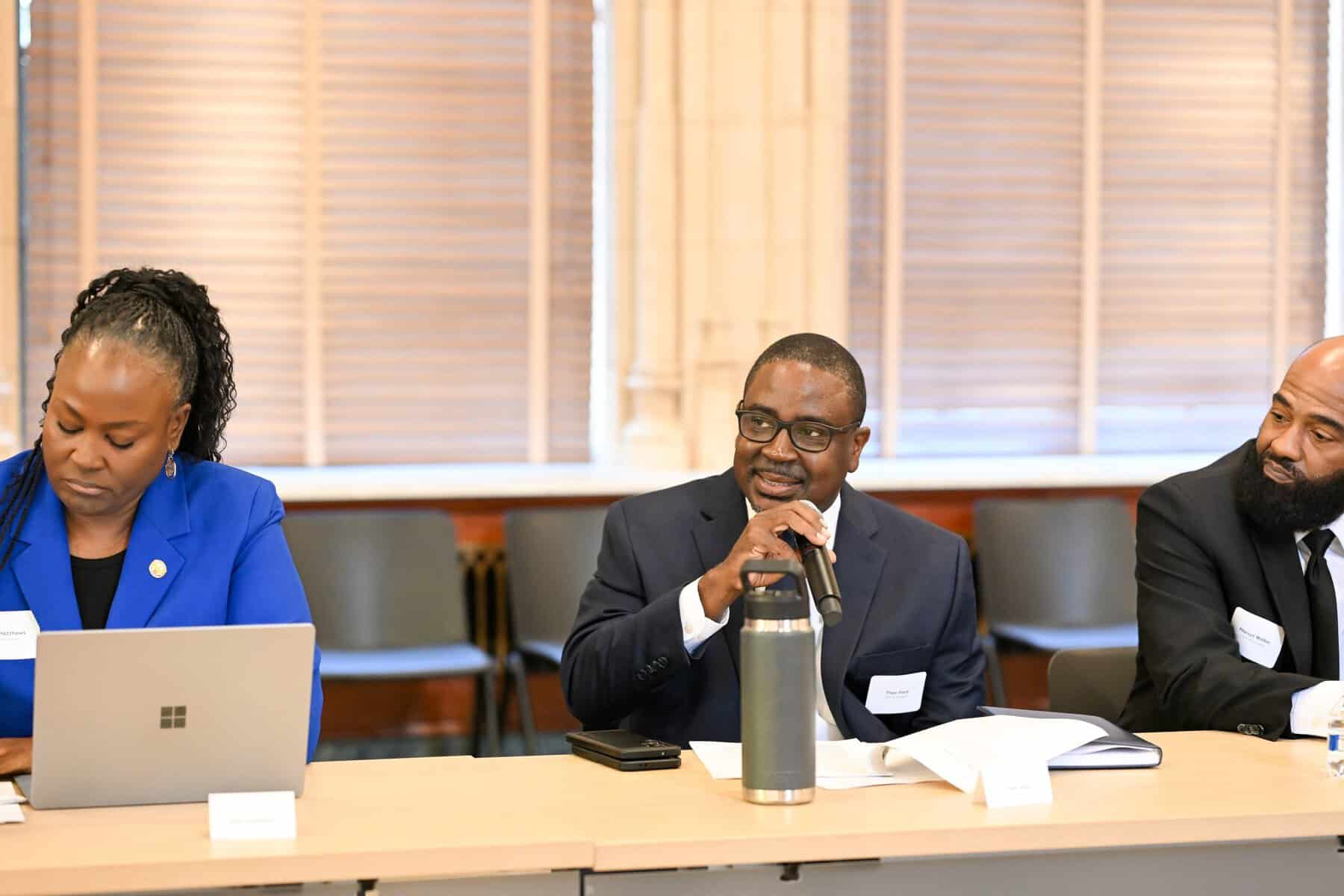
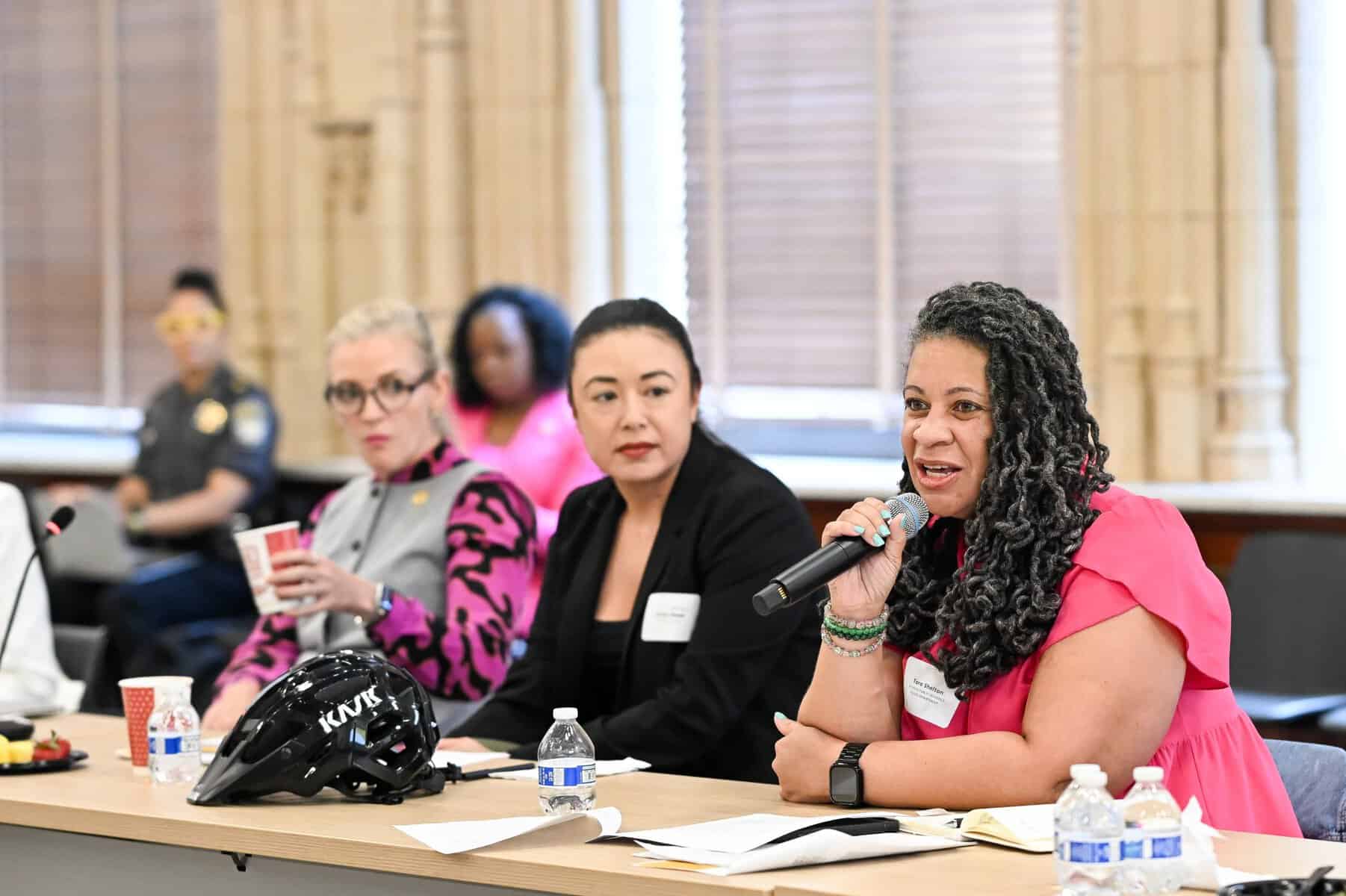
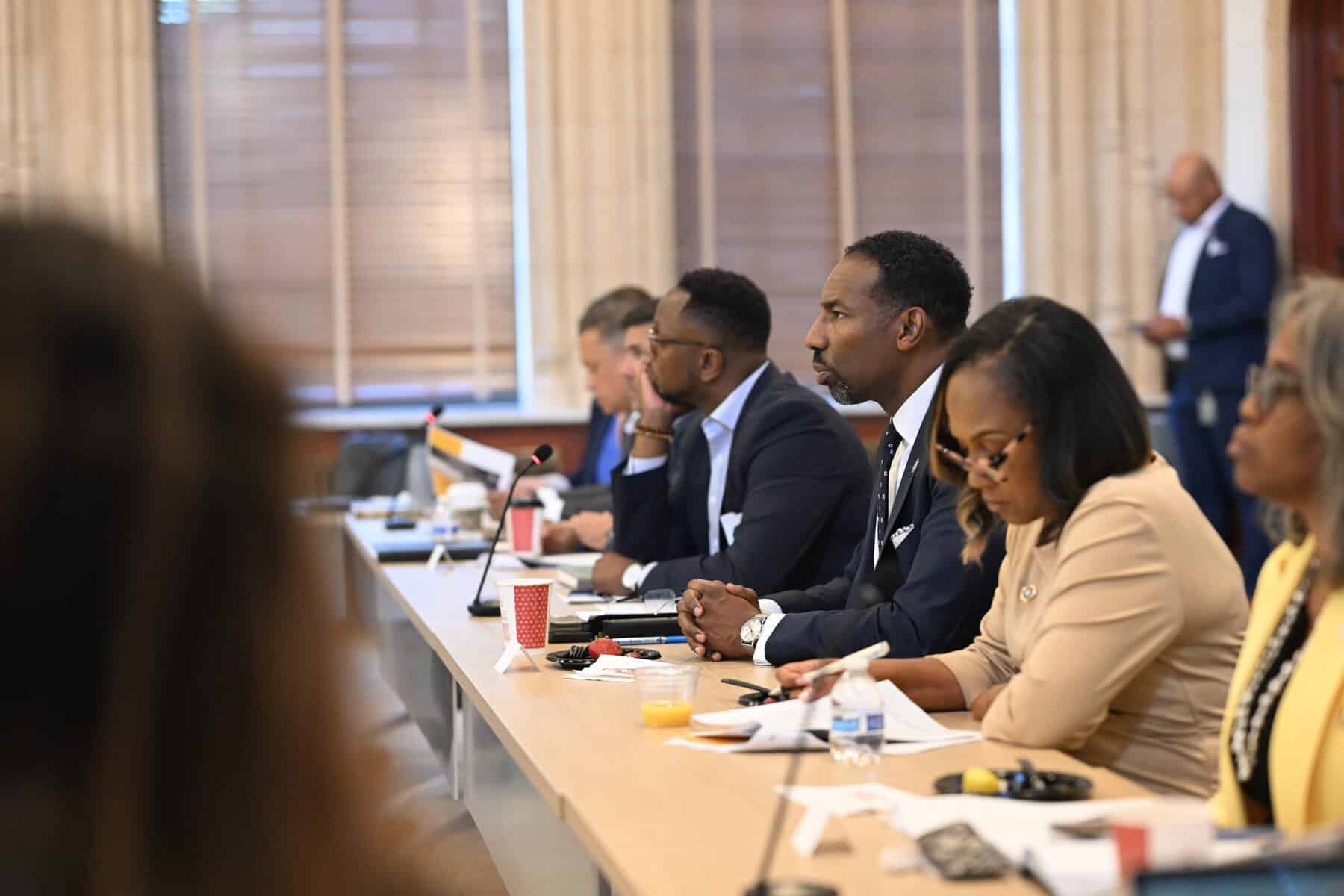
Mayor Andre Dickens welcomed participants Monday as the City launched the Atlanta Practicum on Partnership-Based Violence Reduction, a four-day training and planning session led by the Violence Reduction Center (VRC), a national organization that helps communities develop evidence-informed strategies to reduce violence. The practicum brings together approximately 50 leaders from the City of Atlanta, Atlanta Police Department, Atlanta Public Schools, Fulton County, healthcare organizations and community partners to examine Atlanta-specific data, learn from national experts and develop coordinated strategies tailored to the city’s needs.
“We’ve proven what Atlanta can accomplish when we all move in the same direction,” Mayor Dickens told attendees. “Now it’s Atlanta’s turn to build a plan that reflects our city, our people and our neighborhoods.”
Building on Progress
The practicum comes as Atlanta continues to make significant progress in public safety.





During his remarks, Mayor Dickens noted that homicides have declined by more than 40 percent since he took office and that the city ended 2025 with fewer than 100 homicides—the lowest annual total since 2018.
The Mayor noted that while Atlanta has made significant progress, the work is far from finished.
“Progress alone isn’t the goal,” he said. “The goal is making sure all of Atlanta experiences the best of Atlanta.”
A Whole-of-Government Approach
The practicum supports the City’s Neighborhood Reinvestment Initiative (NRI), which focuses investments in neighborhoods that have experienced generations of disinvestment.
Rather than relying solely on enforcement, the initiative combines investments in affordable housing, transportation, infrastructure, parks, healthy food access, youth opportunities, economic development and violence prevention to address the underlying conditions that contribute to violence.
“Through the Neighborhood Reinvestment Initiative, we’re addressing many of the underlying conditions that have contributed to violence in too many of our neighborhoods for far too long,” Mayor Dickens said.
Turning Data Into Action
One of the practicum’s first sessions focused on understanding violence in Atlanta through data and research.
Presenters discussed how combining law enforcement information with data from partners such as Grady Health System and the Georgia Department of Public Health can provide a more complete understanding of community violence, particularly non-fatal shootings, which are often underreported. Participants also explored how data can help identify repeat victims, repeat offenders and neighborhoods where resources and interventions can have the greatest impact.
Researchers noted that violence remains concentrated in a relatively small number of neighborhoods and even smaller micro-locations, reinforcing the importance of place-based strategies and partnerships that connect residents with the services and support they need.
The discussions also highlighted prevention efforts such as responsible firearm storage, public education and stronger collaboration among public safety, healthcare and community organizations.
Learning From Proven Strategies
Led by the Violence Reduction Center, the practicum combines research with practical application.
Throughout the week, participants are learning from nationally recognized researchers and practitioners who have successfully implemented violence reduction strategies in communities across the country. Sessions focus on street outreach, focused deterrence, environmental crime prevention, social media and community violence, cognitive behavioral interventions, funding strategies and implementation planning.
The group will also participate in planning exercises designed to guide Atlanta’s next phase of violence reduction efforts. Following the practicum, recommendations will be finalized and presented to Mayor Dickens to help guide implementation.
Looking Ahead
Mayor Dickens encouraged participants to use the week to challenge assumptions, examine the data and learn from one another.
“I need you to think critically about what the data is telling us,” he said. “Be honest about what’s working. Be equally honest about what’s not.”
He closed by reminding attendees that the work ultimately serves Atlanta’s residents.
“The folks living in our Neighborhood Reinvestment Initiative neighborhoods deserve action,” the Mayor said. “They deserve safer streets. They deserve greater opportunity. And they deserve to experience the best of Atlanta.”