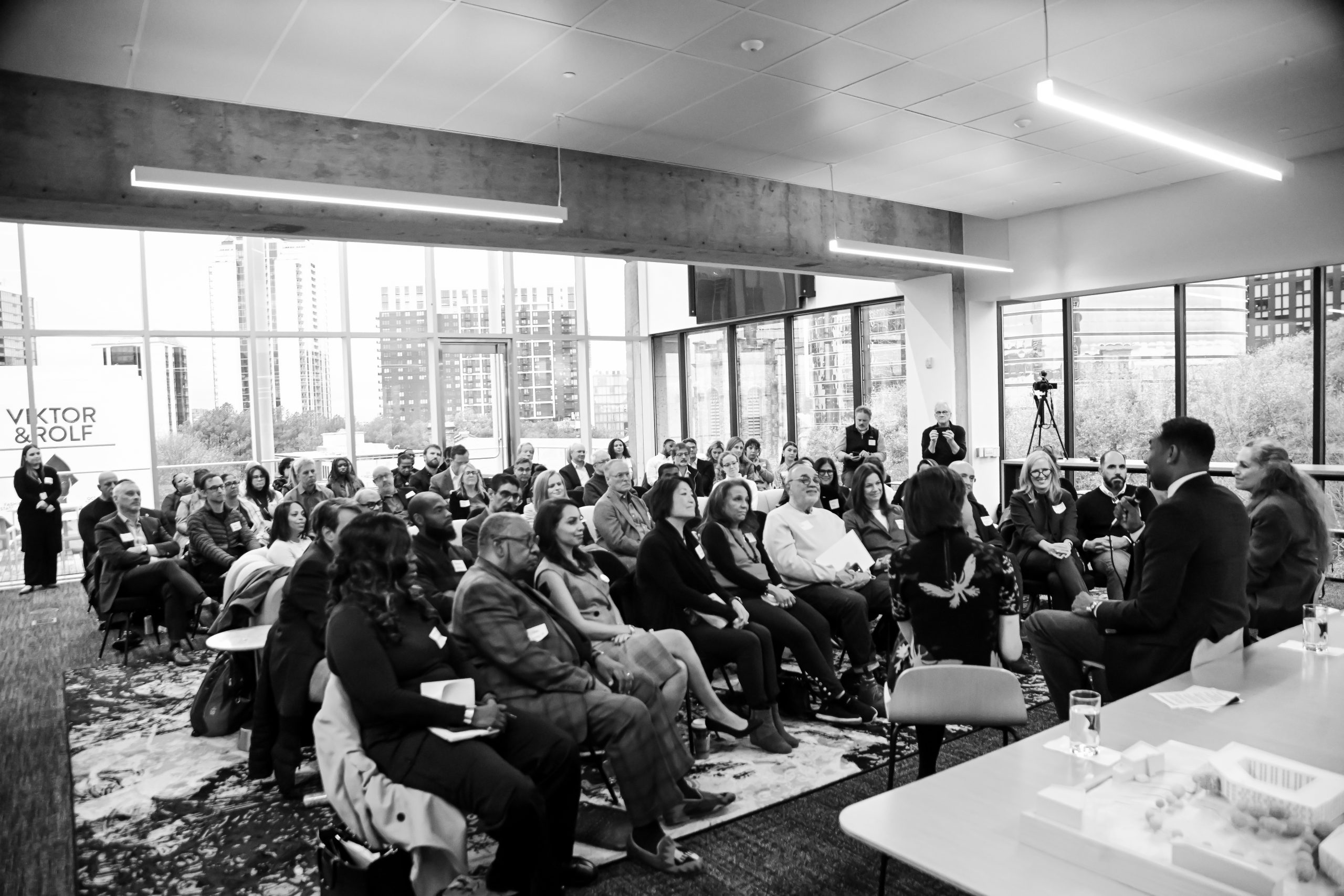
Atlanta’s design community gathered this week for the Atlanta Design Roundtable, a convening of architects, planners, university design leaders, developers, and historic preservation experts who help shape the look and feel of our neighborhoods. Held at Perkins & Will and the Museum of Design Atlanta (MODA), the event focused on collaboration, innovation, and a shared vision for a city that grows with intention.
Mayor Andre Dickens joined the Roundtable for a fireside chat, underscoring Atlanta’s commitment to building safe, connected neighborhoods with strong upward mobility, opportunity, and a future-focused approach to infrastructure and design.
A Collective Vision for Atlanta’s Next Era of Design
Moderated by architect Melody Harclerode, FAIA, and journalist Maria Saporta, the conversation explored how Atlanta can position itself as the Southeast’s leading hub for design excellence by its 200th birthday in 2037.





Participants highlighted:
- The need for a unified vision across architects, planners, preservationists, developers, universities, and community members.
- Atlanta’s existing strengths, including its cultural richness, neighborhood pride, creative economy, and world-class universities.
- Design excellence as a community investment, not a luxury — ensuring buildings and public spaces are thoughtful, sustainable, and reflective of local identity.
These ideas connect directly to several city priorities, from the Neighborhood Reinvestment Initiative to preparations for the 2026 FIFA World Cup to the Mayor’s vision of Atlanta as the best place to raise a child.
Honoring Atlanta’s Past While Building Its Future
Historic preservation emerged as a major theme — not as a constraint on growth, but as a catalyst for deeper community identity.
Leaders from the Office of Design and the Department of City Planning shared several preservation efforts now underway:
- The LGBTQ+ Historic Context Statement, a rare citywide historic research project.
- The African American History Education Series, heading into its third installment this spring.
- Historic Preservation Week, which reframed how residents view older, vacant, or underused buildings.
They also lifted up community-driven preservation successes:
- Landmarking of the Philadelphia Baptist School building, now part of more than 60 protected sites.
- Historic districts including Collier Heights, West End, Grant Park, Druid Hills, Washington Park, and Oakland Cemetery.
- Adaptive reuse efforts such as Ponce City Market, the Ralph David House motor lodge conversion, and the activation of Lakewood Fairgrounds.
More than 10,000 properties across the city are covered under Atlanta’s Historic Preservation Ordinance — one of the oldest in the Southeast — showing the scale of the city’s commitment to honoring its history while growing forward.
Reimagining Atlanta Public Schools Properties
The Roundtable also spotlighted a new partnership between Atlanta Public Schools and the Atlanta Urban Development Corporation to thoughtfully repurpose former school sites.
Rather than remaining empty or being sold to the highest bidder, these properties could become:
- Affordable housing
- Community centers
- Cultural spaces
- Small business hubs
- Educational and youth development facilities
Design leaders emphasized that school buildings were once the emotional heart of their neighborhoods — and with careful adaptive reuse, they can be again. This approach preserves cultural capital while expanding opportunity.
Raising the Bar on Design Standards Across the City
Participants discussed how Atlanta can develop stronger design standards that reflect community priorities and prevent future “design misses.”
Key elements included:
- Ensuring buildings serve the people who live, work, and gather around them.
- Advancing Zoning 2.0, Atlanta’s first full zoning rewrite in nearly 40 years.
- Applying lessons from Plan A, the award-winning community-driven planning process.
- Leading by example through high-quality design in public projects.
- Embedding sustainability, context, and inclusivity into every new development.
The shared message: high-quality design communicates a city’s values and directly affects how residents experience their communities.
Designing Transit and Mobility With People at the Center
On transit, members discussed how design can shape the experience of getting around Atlanta — from the BeltLine to MARTA to future transit investments.
They emphasized:
- Transit corridors that are pedestrian-friendly, accessible, and safe.
- Transit options that connect people to jobs, parks, schools, and daily amenities.
- Public spaces around transit that feel welcoming and community-oriented.
Design and mobility are inseparable, participants noted: a well-designed transit system strengthens every aspect of city life.
A Collaborative Path Forward
Throughout the afternoon, a clear theme emerged: the future of Atlanta’s built environment will be shaped by partnership. The Roundtable brought together architects, planners, designers, preservationists, university leaders, community advocates, and City officials to share ideas and align around a common purpose.
Mayor Dickens underscored that design excellence is essential to a thriving, inclusive Atlanta — one where residents feel connected to their neighborhoods, empowered by opportunity, and proud of the spaces around them. With major initiatives already underway, including Zoning 2.0, adaptive reuse partnerships, historic preservation work, and the Neighborhood Reinvestment Initiative, Atlanta is actively shaping a future that is both forward-looking and deeply rooted in community.
The Design Roundtable will continue serving as a space for collaboration and vision-setting as Atlanta prepares for its next century of growth.