


Atlanta is officially a Top 20 park system in America for the first time.
According to the latest ParkScore Index released by the Trust for Public Land, Atlanta climbed from 21st to 18th nationally among the country’s 100 largest cities — continuing a dramatic rise that has seen the city move from 49th place when Mayor Andre Dickens first took office.
Today, nearly 85% of Atlanta residents live within a 10-minute walk of a park, well above the national average.
The annual ParkScore Index evaluates park systems across the country based on access, investment, amenities, acreage, and equity.
For residents, the ranking reflects years of visible investment happening across neighborhoods throughout the city — from upgraded playgrounds and recreation centers to expanded trails, splash pads, greenspaces, and new neighborhood amenities.
“Atlanta’s continuous rise in the ParkScore Index, from 49th when I first took office to now 18th, is further proof that meaningful, deliberate investments deliver results,” said Mayor Andre Dickens. “For more than four years, our Administration has worked to ensure every neighborhood across this city has access to quality parks and greenspace.”
“These spaces are more than just land, they are community; places to gather, celebrate and make memories,” the Mayor added.
The progress also aligns with the Mayor’s broader greenspace vision and the work of the Greenspace Advisory Council, which has focused on expanding equitable access to parks, trails, and connected green infrastructure across Atlanta.
The effort has also included collaboration with organizations including Park Pride, Trust for Public Land, Trees Atlanta, the Atlanta BeltLine, and other greenspace partners across the city.
The Investments Behind the Ranking
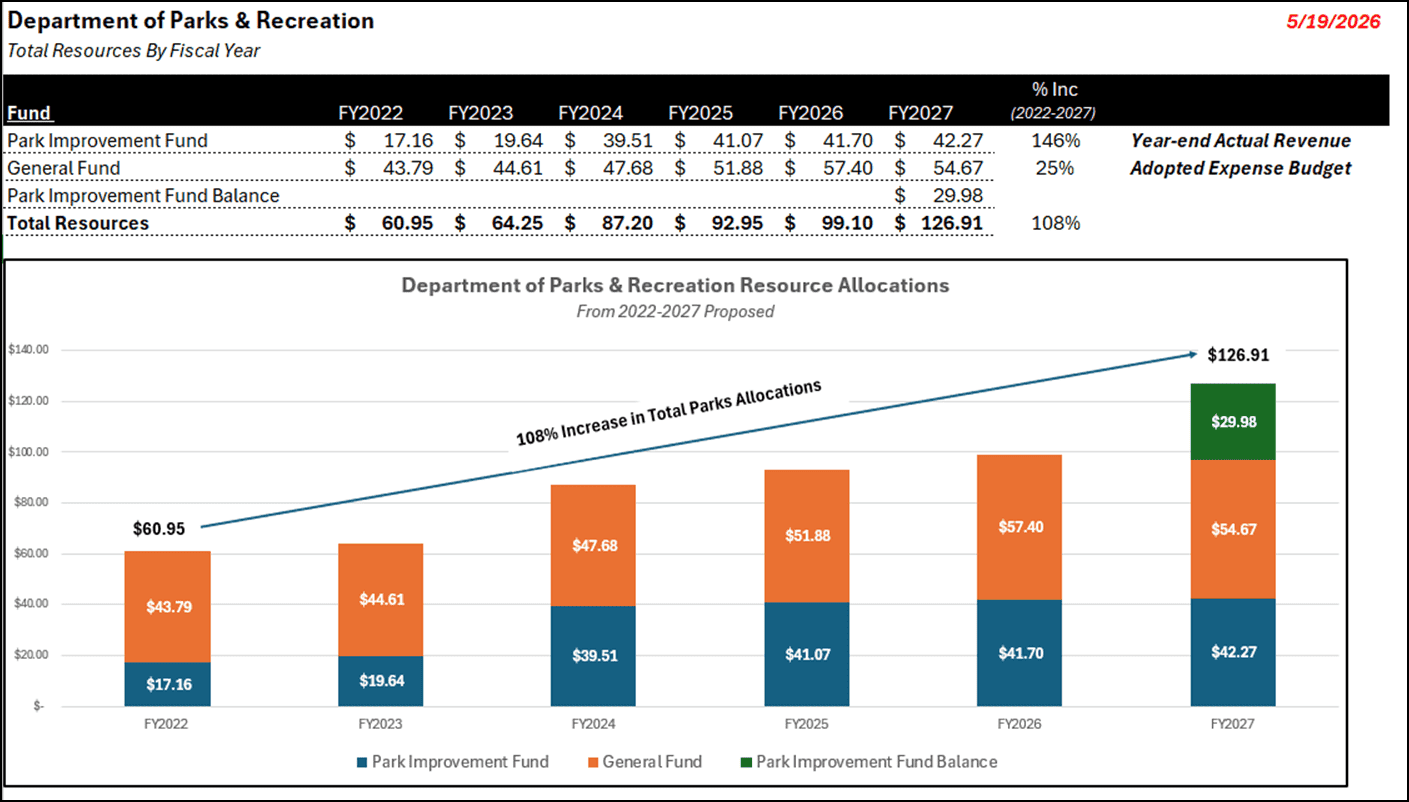
Atlanta’s investment in parks and recreation has more than doubled over the past five years.
The Department of Parks & Recreation budget has grown from about $61 million in FY2022 to a proposed $127 million in FY2027.
That funding supports:
- Park maintenance and upgrades
- Recreation centers
- Youth programs
- Community services
- Trail connections
- Neighborhood park improvements
The Park Improvement Fund has also more than doubled during that time.
In FY2027, the City is using nearly $30 million from the Park Improvement Fund to help accelerate additional park and neighborhood projects across Atlanta.
Today, Atlanta invests about $312 per resident in parks and recreation — one of the highest levels in the country according to the report.
“Strong park systems do not happen by accident — they require long-term planning, consistent investment and collaboration,” said Chief Operating Officer LaChandra Burks.
Officials say the ranking reflects years of long-term planning, sustained investment, and coordination across agencies and community partners.
What the Data Shows
The 2026 ParkScore report highlighted several areas where Atlanta scored particularly well.
Strong Park Access
According to the report, 84.6% of Atlanta residents live within a 10-minute walk of a park.
That score reflects continued investments in neighborhood parks, trail expansion, walkability improvements, and efforts to connect communities to public green spaces.
Recreation and Amenities
Atlanta also scored above average nationally for amenities, including:
- Playgrounds
- Recreation and senior centers
- Splash pads
- Dog parks
- Trails and recreational facilities
The report also highlighted improvements in park equity, with Atlanta earning above-average national scores for low-income households and residents of color living within a 10-minute walk of a park.
Commissioner Justin Cutler said recommendations from the Greenspace Advisory Council helped guide investments including increased maintenance funding, a joint use agreement with Atlanta Public Schools, and strategic acquisitions in historically disinvested communities.
While acreage and park size remain areas for continued growth, officials say ongoing greenspace acquisition efforts and long-term land-use planning strategies are intended to strengthen Atlanta’s park system in the years ahead.
For many residents, the ranking represents something simpler: more places to walk, play, gather, exercise, and enjoy community closer to home.