


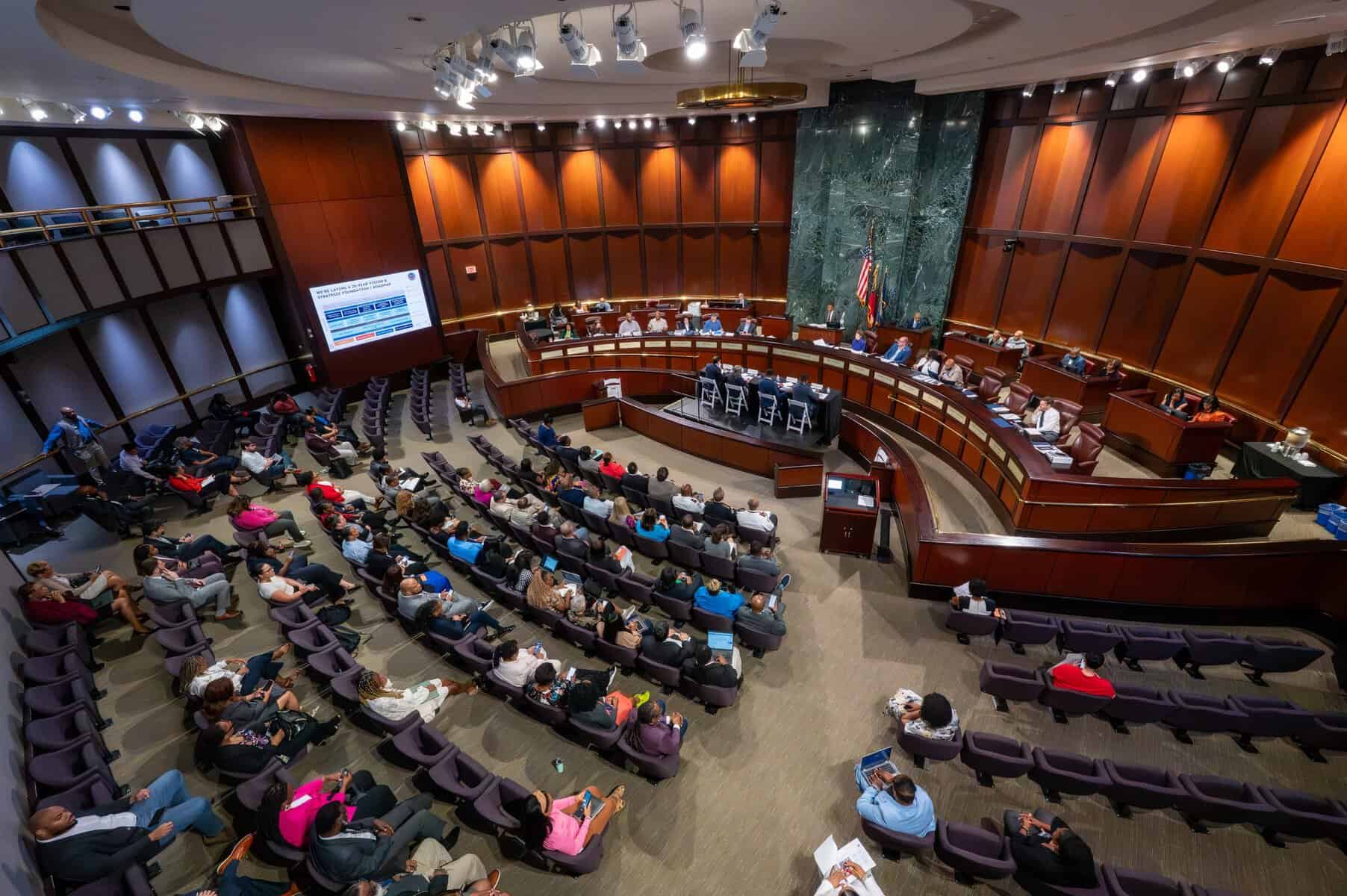
“We have built something remarkable,” Mayor Andre Dickens said during Wednesday’s FY2026 budget presentation, “and now the work is to make sure that all of Atlanta gets the best of Atlanta.”
Mayor Andre Dickens opened Wednesday’s FY2026 budget presentation with a message city leaders returned to throughout the day: Atlanta’s recent momentum and national recognition should increasingly translate into visible improvements residents can experience across every neighborhood.
During the presentation, the Mayor pointed to years of investment in youth programs, public safety, affordable housing, parks, food access, and infrastructure as proof that many of the city’s recent gains were intentional — not accidental.
“We invested $185 million in youth services, and because we did that, homicides are now down almost 50%,” the Mayor said, arguing that investing in young people remains one of the city’s most important public safety strategies.
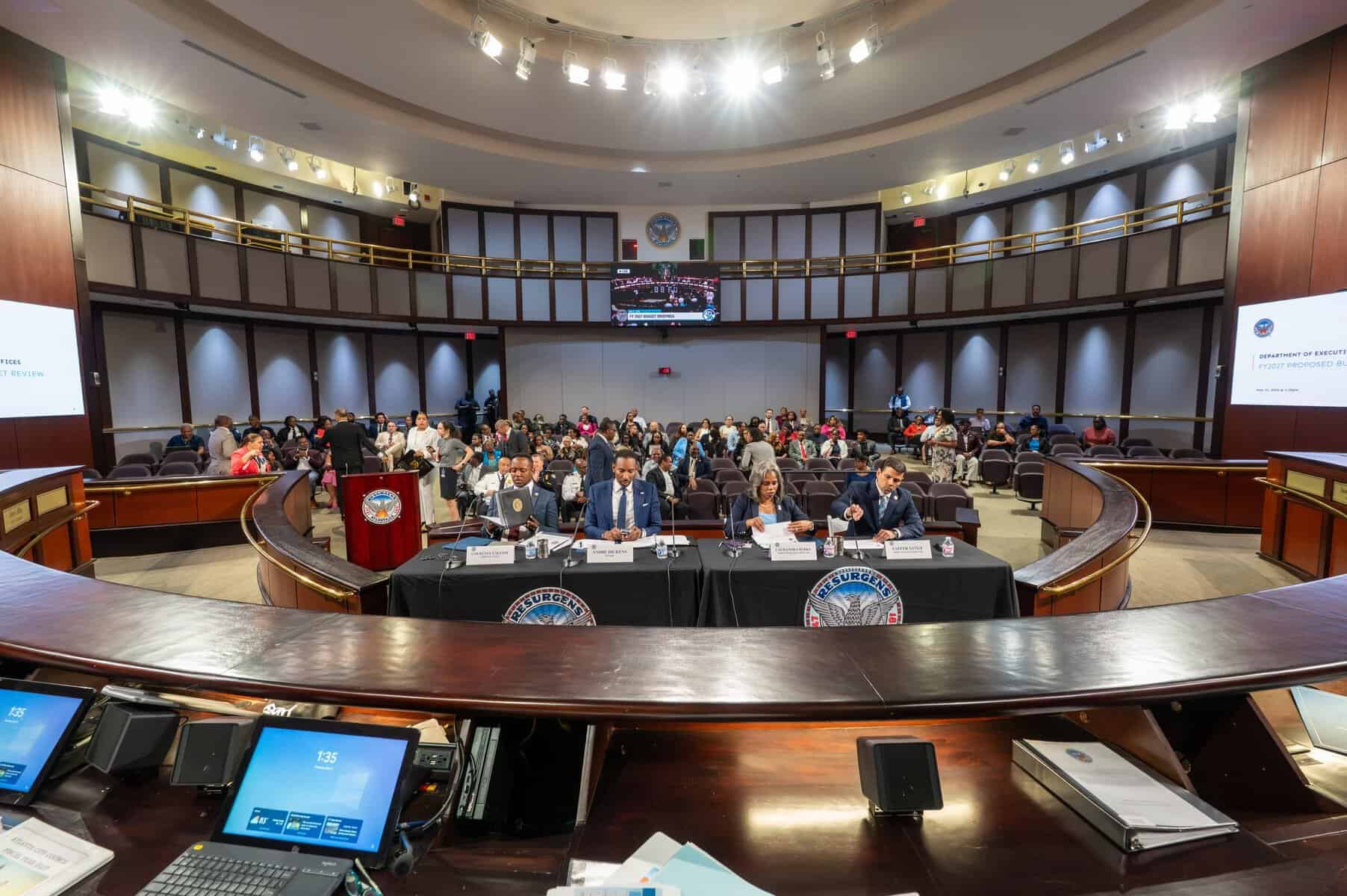
“Atlanta is winning,” the Mayor said during the presentation while pointing to national rankings recognizing Atlanta as a top city for business, college graduates, Black homeownership, Black-owned businesses, and sports.
But the Mayor also stressed that not every neighborhood has experienced that growth equally.
“Atlanta is growing, but not all of Atlanta is seeing the same amount of growth,” he said. “The growth is not equal.”
He described the proposed budget as the administration’s effort to “accelerate the work” through additional investment in affordable housing, safer streets, youth programs, infrastructure, and the continued implementation of the Neighborhood Reinvestment Initiative.
The proposed FY2026 budget includes nearly $975 million in city operating spending and almost $3 billion across all city operations.
What Residents Are Seeing Across Atlanta
Throughout the presentation, executive leadership repeatedly tied budget investments to things residents directly experience every day — safer streets, smoother roads, parks, housing, youth programs, grocery access, and neighborhood improvements.
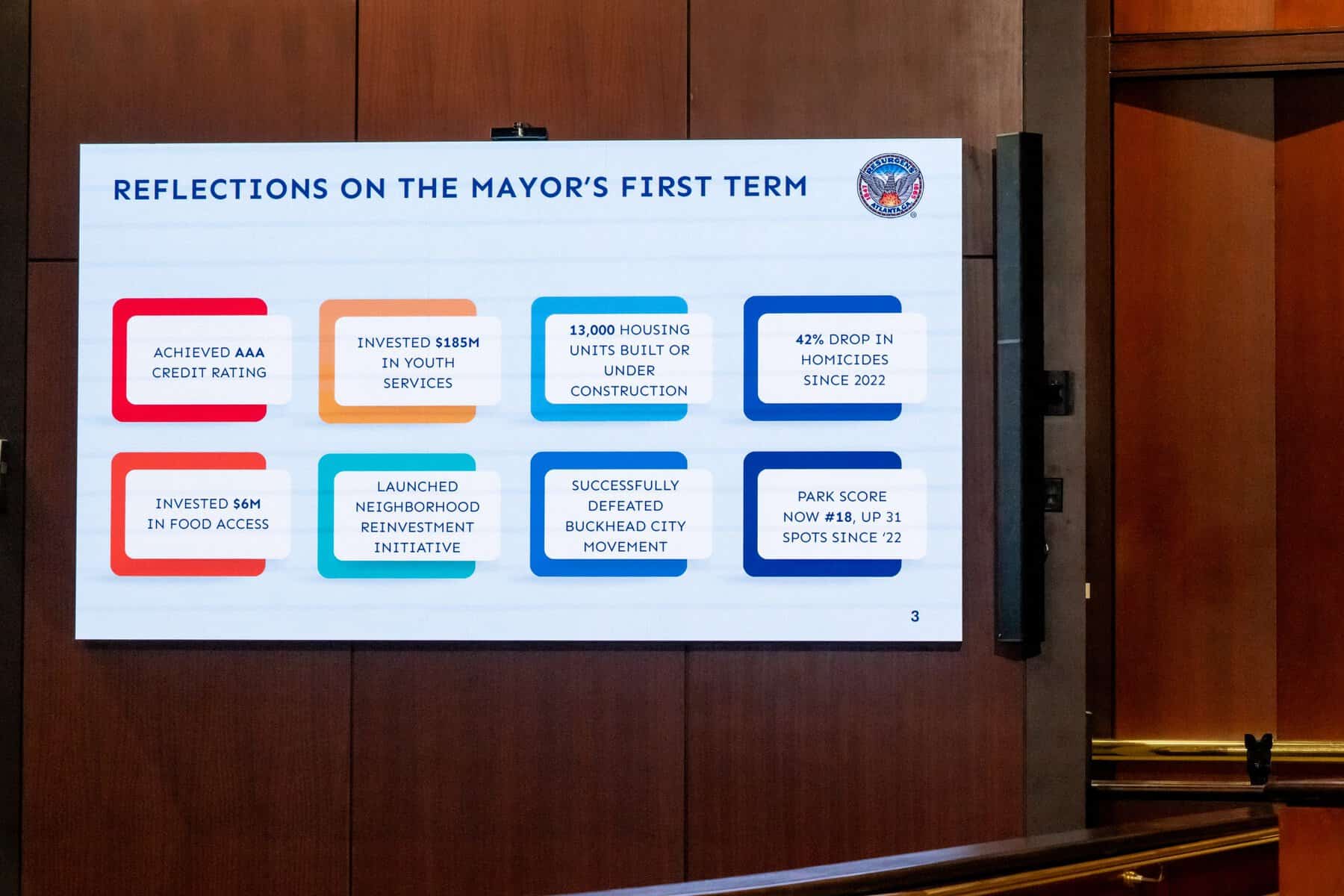
- a 42% reduction in homicides since 2022,
- a 17.6% reduction in E911 response times,
- 482 additional police officers and firefighters added in recent years,
- seven new public safety facilities underway,
- the opening of Atlanta’s fourth At-Promise Center,
- more than 600 acres of greenspace added citywide,
- and continued investments in food access, workforce development, and neighborhood infrastructure.
Leadership also pointed to visible infrastructure work happening throughout the city, including resurfaced roads, upgraded streetlights, safer intersections, sidewalk improvements, greenspace expansion, and transportation upgrades.
Preparing Atlanta for Future Growth
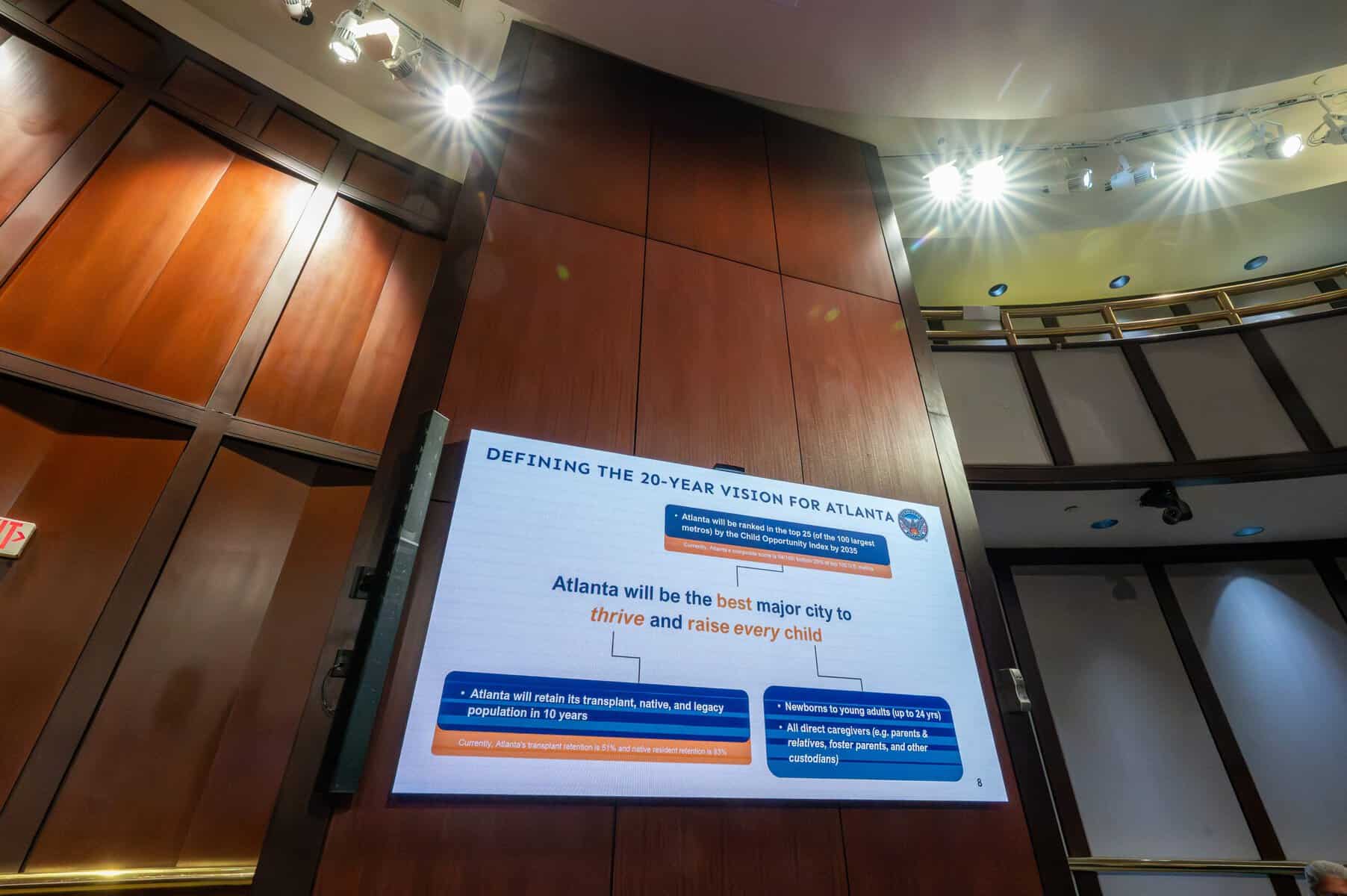
Chief Strategy Officer Zaffer Sange introduced the administration’s early work on a new 20-year vision framework designed to help Atlanta plan more intentionally for future growth.
The Mayor said the city previously lacked a long-term roadmap that looked ahead at future population growth, economic shifts, infrastructure demands, workforce needs, and financial planning.
“This will be the first time you hear us talking about a 20-year plan,” the Mayor said before turning the presentation over to Sange.
That includes operational planning and infrastructure coordination tied to FIFA World Cup 2026 and other major global events expected to bring millions of visitors to Atlanta in the coming years.
During the discussion, Sange also emphasized the importance of measurable goals and long-range planning that can continue beyond any single administration.
Neighborhood Investment Remained Central
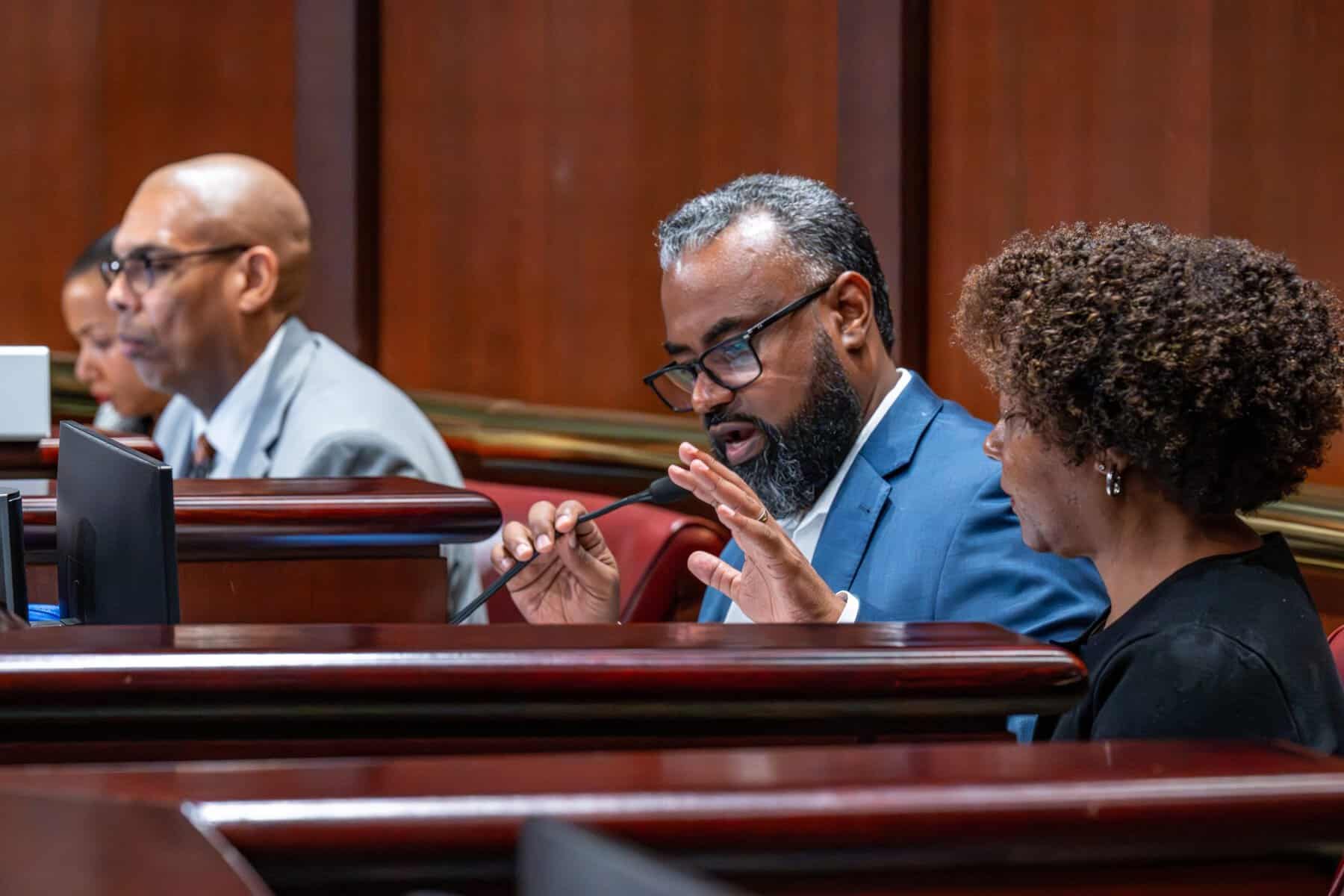
Chief of Staff Courtney English tied much of the administration’s strategy to making sure Atlanta’s growth reaches more neighborhoods and residents.
That included affordable housing expansion, programs aimed at helping longtime residents stay in their communities, workforce opportunities, food access efforts, and neighborhood investment tied to the proposed Neighborhood Reinvestment Initiative.
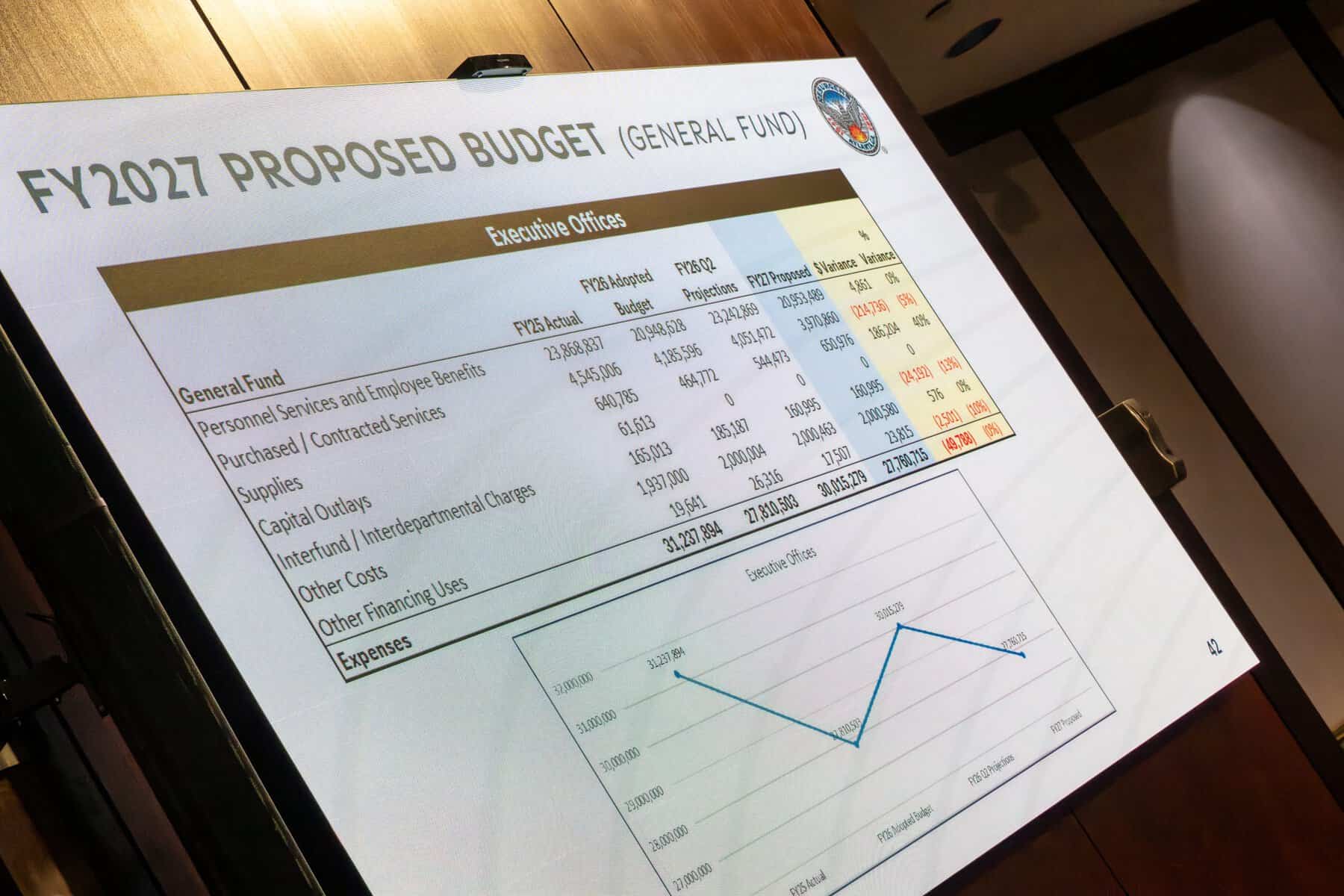
Throughout the presentation, leadership repeatedly returned to one core idea: residents should increasingly be able to see where city investments are going and how those investments are improving daily life across Atlanta.
Turning Plans Into Projects Residents Can See
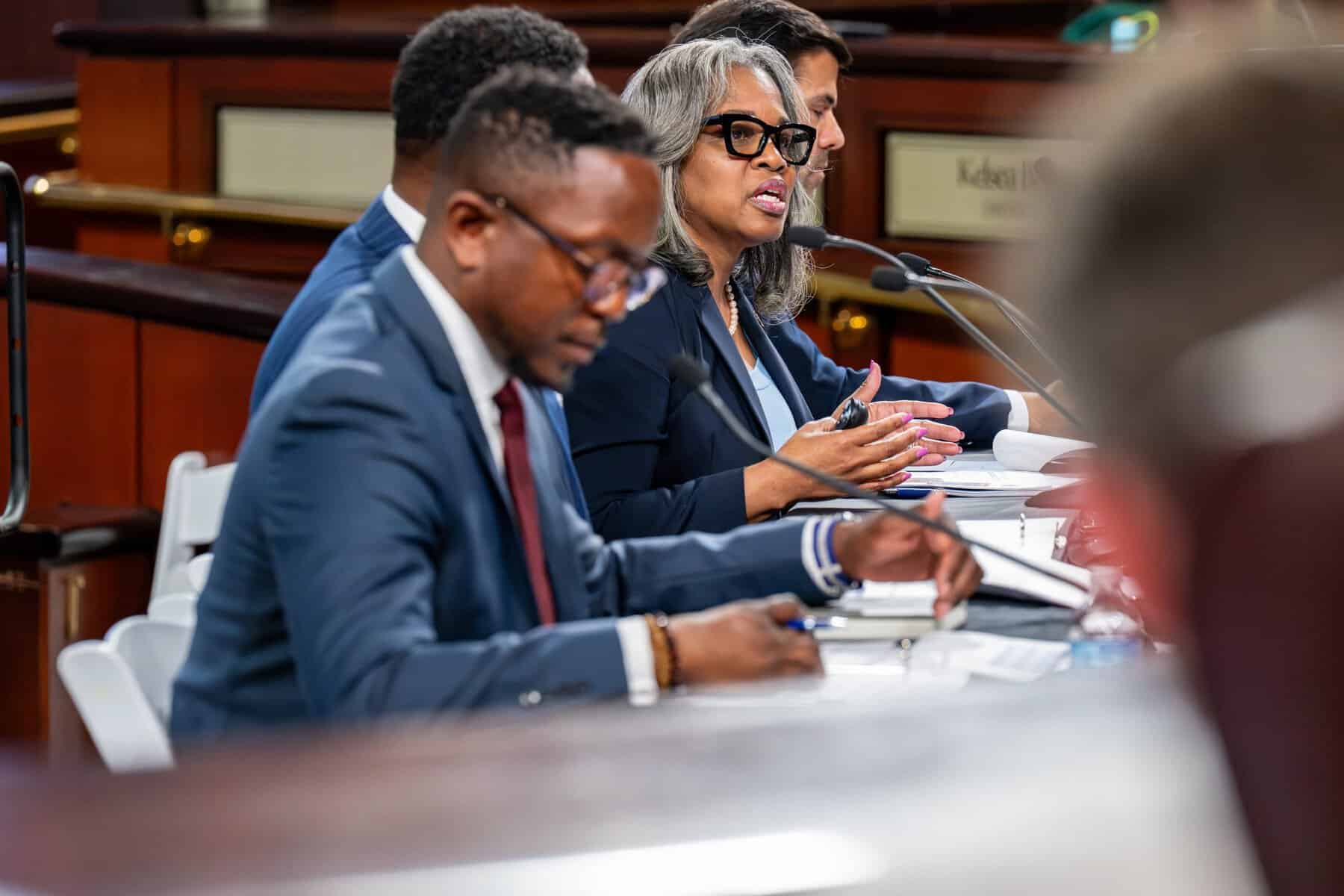
Chief Operating Officer LaChandra Burks highlighted the amount of coordination happening behind many of the projects residents are already seeing underway across the city.
That includes road resurfacing, safer streets and intersection improvements, upgraded infrastructure, greenspace expansion, emergency preparedness projects, and major operational planning happening ahead of FIFA World Cup 2026.
By the end of the presentation, the administration’s broader message was clear: Atlanta’s next phase of growth will ultimately be judged not just by rankings or momentum, but by whether residents across every neighborhood continue seeing and experiencing the benefits of those investments in daily life.
Residents who want to watch the FY2027 Executive Budget Briefings presentation can view the meeting online beginning around the 2 hour and 36 minute mark, when the executive budget presentation begins.