The Atlanta City Council Finance/Executive Committee voted unanimously Wednesday to advance the Opportunity for All: Neighborhood Reinvestment Act (NRI), moving the proposal to the full City Council for consideration next week.
The legislation is designed to support affordable housing, neighborhood revitalization, economic opportunity, and anti-displacement efforts across Atlanta while creating stronger accountability measures tied to future investment.
The proposal has generated significant discussion in recent months around housing affordability, displacement prevention, long-term tax revenue impacts, and oversight of Tax Allocation District (TAD) spending.
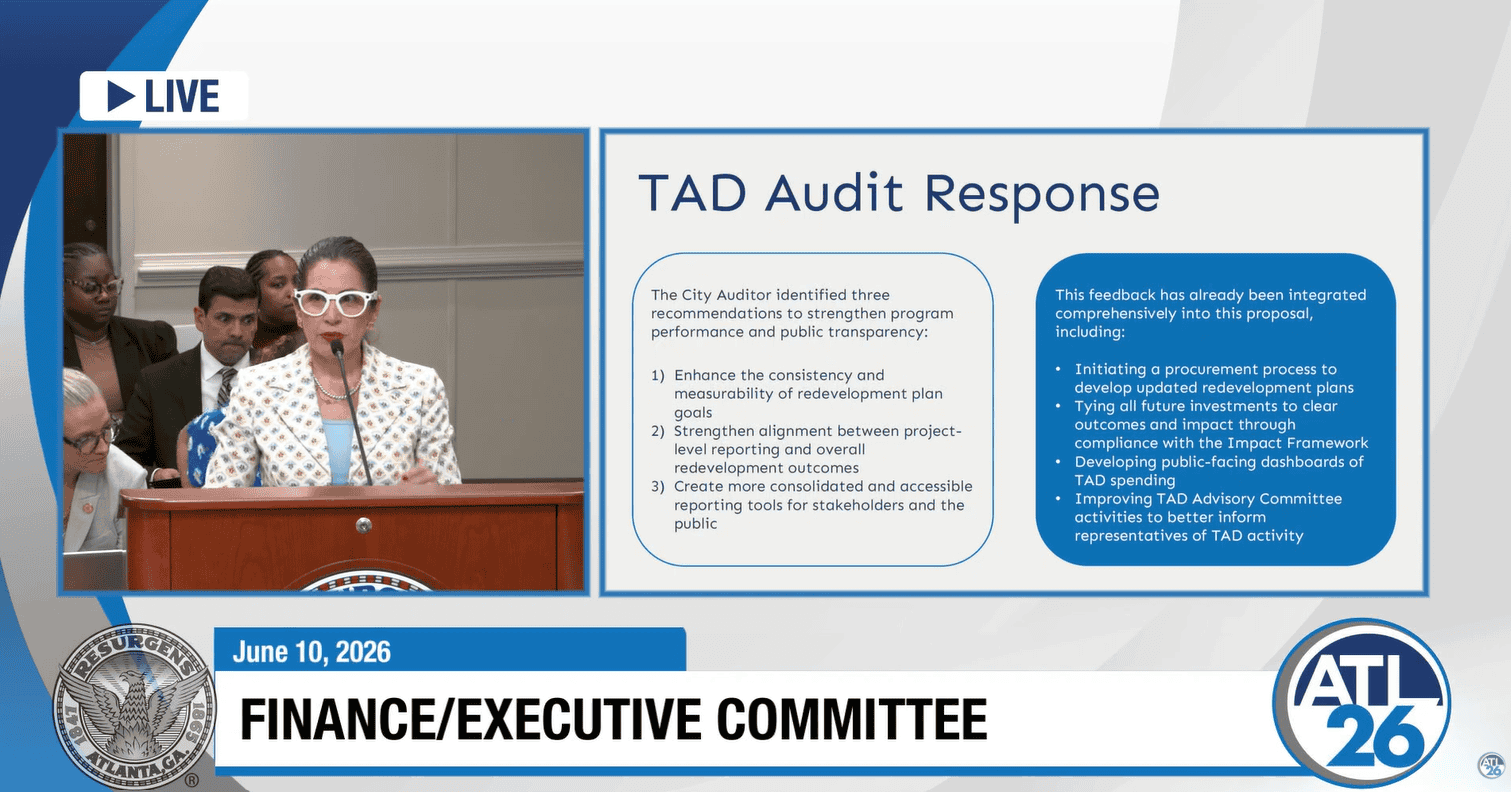
During Wednesday’s committee meeting, councilmembers and administration officials discussed amendments added to strengthen transparency, public reporting, and long-term oversight of Tax Allocation District (TAD) investments.
Among the accountability measures highlighted during the meeting:
- Updated redevelopment plans tied to neighborhood priorities
- Public dashboards tracking TAD spending
- Regular reporting to City Council
- Triennial external audits of TAD performance
- Annual public reporting and community engagement requirements

Committee amendments also added additional guardrails related to future bonding authority and long-term financial oversight.
City officials also addressed recommendations from the recent City Auditor review of Atlanta’s TAD program, noting that several recommendations have already been incorporated into the legislation, including stronger reporting standards and clearer outcome tracking.
“Everyone agrees that Atlanta must grow, but growth must be intentional and equitable,” said Mayor Andre Dickens. “The Opportunity for All: Neighborhood Reinvestment Act creates the framework to invest in neighborhoods that have experienced decades of underinvestment while strengthening tools that help residents remain in the communities they call home.”
Administration officials emphasized that the initiative is focused not only on development, but also on creating long-term opportunity for existing residents through housing stability, access to services, neighborhood amenities, and economic investment.
“The goal is not simply to create new development,” said Courtney English, Chief of Staff for the City of Atlanta. “The goal is to create opportunity.”
Throughout the discussion, councilmembers raised questions about affordability, displacement prevention, renter protections, and long-term neighborhood stability. Administration officials said the framework is guided by research examining the drivers of displacement and includes strategies focused on housing preservation, economic mobility, commercial stability, and equitable development.
Mayor Dickens also thanked councilmembers for their continued engagement throughout the process and for helping strengthen the legislation
The legislation now moves to the full Atlanta City Council for consideration.