
When someone is facing a mental health crisis, struggling with substance use, or experiencing homelessness, jail is not always the right answer.
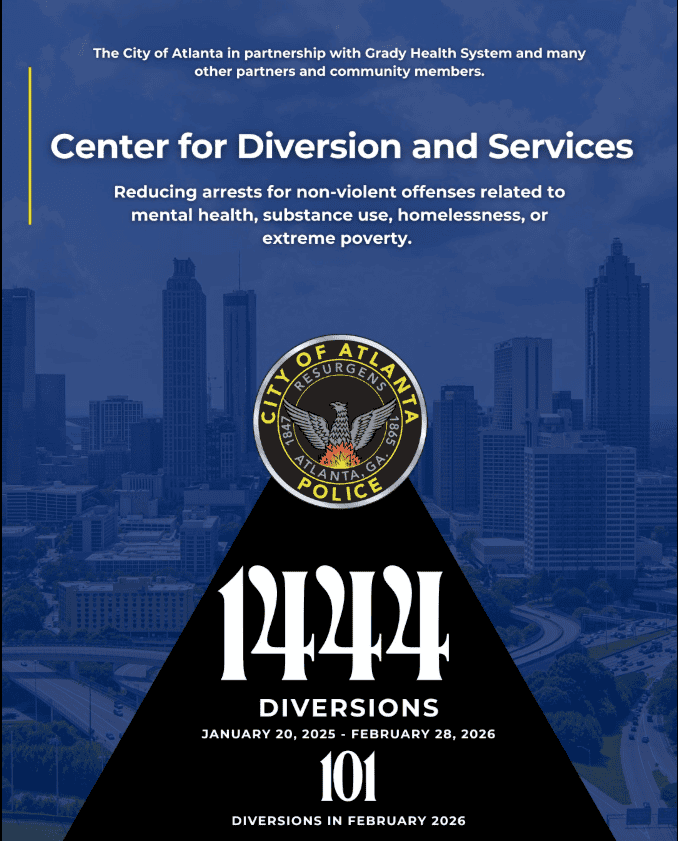
That’s why the City of Atlanta opened the Center for Diversion and Services on January 20, 2025, inside the Atlanta City Detention Center. Since opening, the Center has recorded 1,444 diversions, offering eligible individuals connection to services instead of arrest.
Who Qualifies for Diversion?
The diversion program is structured and intentional. Individuals must meet all of the following criteria:
- Be 18 years or older
- Have committed a non-violent offense
- Voluntarily agree to enter the diversion program in lieu of arrest
- Have no active warrants
- The arresting officer must observe that the offense was connected to:
- A mental health crisis
- Substance use
- Homelessness
- Extreme poverty
The following individuals are not eligible:
- Individuals under 18
- Those with active warrants
- Violent offenders
- Cases where a victim objects to diversion
- Cases where the victim wishes to prosecute
This ensures diversion remains focused on appropriate, non-violent cases where services — not incarceration — are the better response.
Turning Existing Space Into a New Solution
Rather than building a new facility, the City reworked existing space within the Atlanta City Detention Center to create a dedicated diversion environment with its own layout and specialized team.
The redesign allows law enforcement officers to choose a pathway centered on stabilization and assessment when appropriate, while detention operations continue uninterrupted.
“This work recognizes that not every situation calls for a jail cell,” said Chief Operating Officer LaChandra Burks. “When someone is in crisis, connecting them to help instead of arrest can change the trajectory of their life and that makes our entire city stronger.”
Why It Matters
Each diversion represents an individual who received evaluation and access to support services instead of entering the traditional incarceration process.
By addressing underlying causes — whether mental health needs, substance use, or housing instability — the City aims to reduce repeat offenses and improve long-term outcomes.
The Center reflects Atlanta’s broader commitment to One Safe City: a public safety approach that prioritizes accountability, prevention, and compassion.